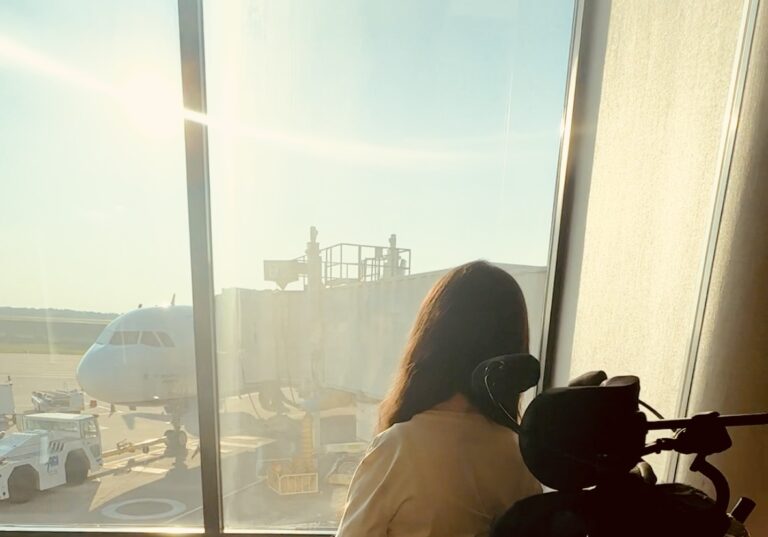
Wheelchair Accessible Málaga: A Power Wheelchair User’s Complete Guide to the City
I had no idea Málaga was going to be this easy to navigate in my wheelchair — and honestly, I need to tell you everything!
Málaga is a sun-soaked city on Spain’s Costa del Sol, and it’s one of those places that tends to fly under the radar compared to Barcelona or Madrid — but it absolutely shouldn’t. It’s packed with history, incredible food, world-class museums, and a waterfront that you could spend an entire afternoon exploring. It’s also, in my opinion, one of the most wheelchair accessible cities in Europe.
I went into this trip with zero expectations. Málaga wasn’t even the main event (we were spending most of our time at an accessible villa along the Costa del Sol) but we stayed two nights in the city at the start of our trip, and it completely surprised me. The old town is flat, the pavements are smooth, and almost everywhere we wanted to go was accessible. For a city with 3,000 years of history, that’s not a small thing.
If you’re a wheelchair user, a power chair user, a mobility scooter user, or someone with limited mobility researching what wheelchair accessible Málaga is actually like before booking — this post is for you. Everything here is based on my own experience as a power wheelchair user, so I always recommend doing your own research to make sure your specific access needs will be met. That said, I’ve tried to give you the real picture, not just the highlights.
This blog post will go over everything that you need to know, but if you want to start off with a quick overview, you can check out the short TikTok vlog that I made on my wheelchair accessible day in Malaga, Spain:
This post may include affiliate links. If you choose to book through them, I may earn a small commission at no extra cost to you. All opinions are completely my own.
Is Málaga Wheelchair Accessible? Here’s the Honest Answer
Yes — Málaga is one of the most wheelchair accessible cities in Europe, and more so than most visitors expect. Málaga was recognized with a European Smart Tourism Award in 2019 for outstanding achievements in accessibility, and you can genuinely feel that investment when you’re rolling through the city.
The biggest win is the terrain. Unlike most European cities, old town Málaga has almost no cobblestones. The streets in the historic centre have a smooth, almost marble-like surface that my power wheelchair glided over effortlessly. The centre of Málaga has mostly pedestrian streets, which makes it much easier to navigate in a wheelchair or electric scooter.
The city is also compact and flat, which means you can cover a lot of ground without a car. For me as a power wheelchair user, not having to pre-book accessible transport for every single outing was so freeing!
Wheelchair Accessible Attractions in Málaga: What to See and What to Know
Málaga Cathedral: Fully Accessible and Free Entry for Disabled Visitors
The Cathedral of Málaga is fully wheelchair accessible and one of the most disability-friendly attractions in the city. It’s nicknamed La Manquita — “the one-armed lady” — because one of its towers was never completed. The story goes that the funds were redirected to support the American Revolution. Architectural unfinishedness has never looked so beautiful.
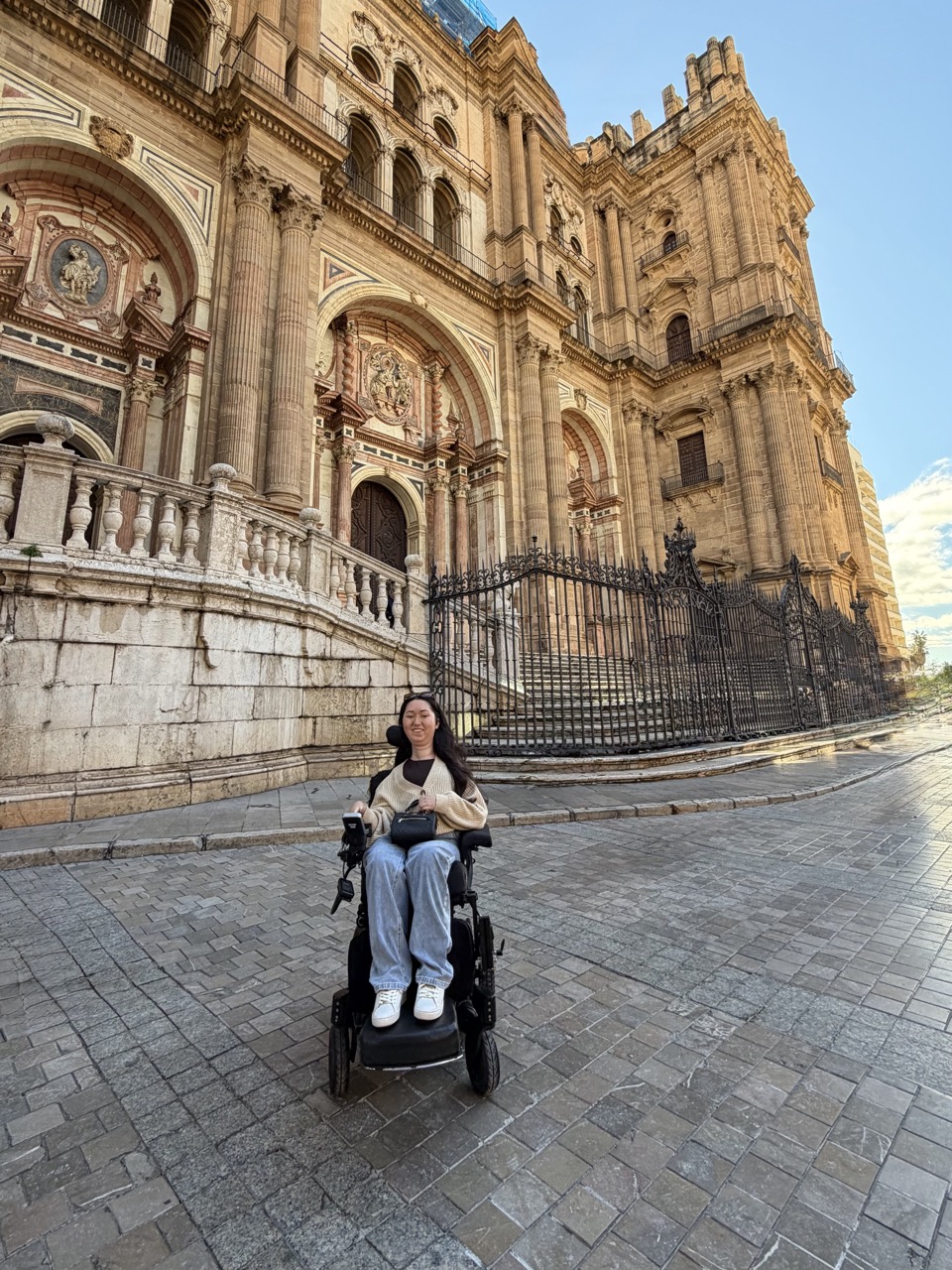
Here’s the key tip: people with disabilities and one companion get in free. You don’t need to book ahead — just go to the entrance and ask. According to the Cathedral’s official ticketing information, free entry applies to visitors with a disability; it doesn’t include the audio guide, and the free ticket is for individual visitors rather than groups.
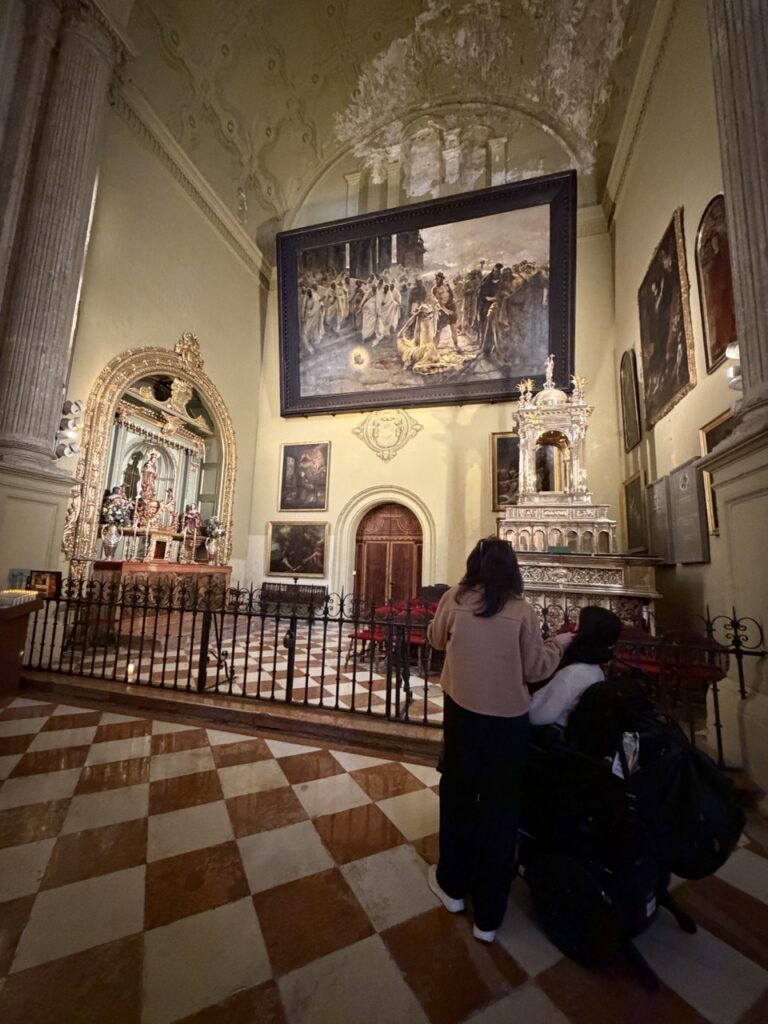

It’s a stunning building — the scale, the light, the detail. Even if religious architecture isn’t usually your thing, this one is worth every minute.
The Alcazaba: More Wheelchair Accessible Than You’d Expect
The Alcazaba is partially wheelchair accessible — and honestly, more doable than you might expect from reading other guides.
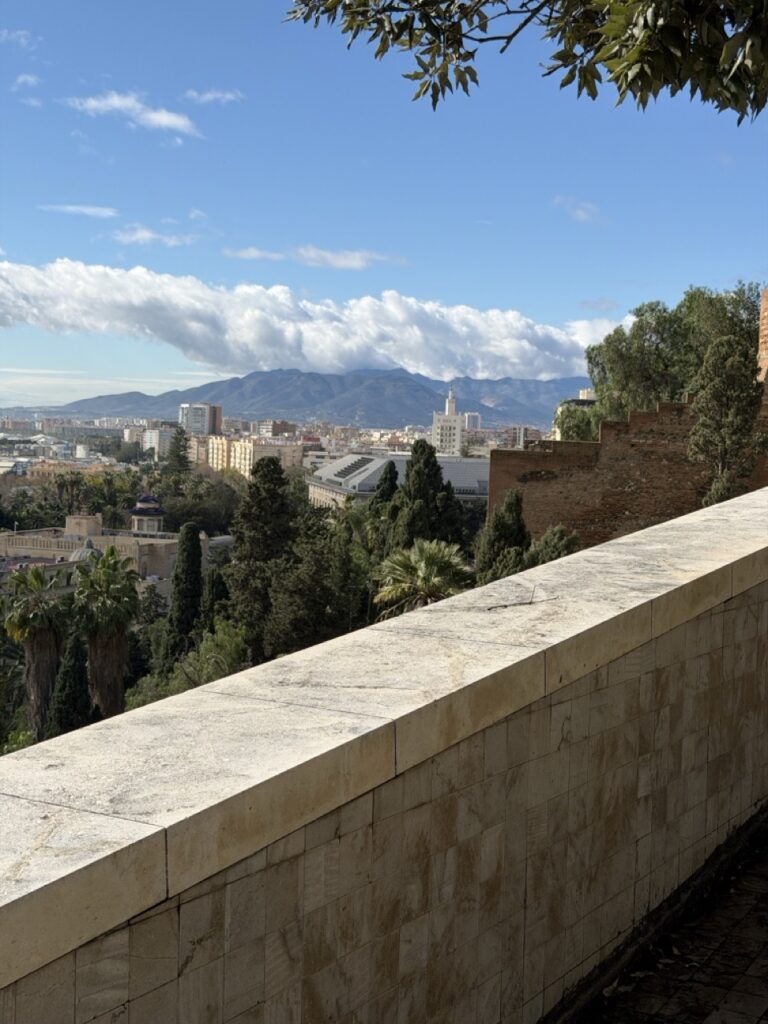
The main entrance path from the bottom is a hard no for most folks with disabilities (lots of steps!). But there’s a long ramp that takes you up to a viewpoint, and you don’t need a ticket for it. The views from up there are some of the best in the whole city, and being right up against this ancient Moorish fortress with the whole of Málaga spread out below you is one of those surreal travel moments. I left so glad we went.
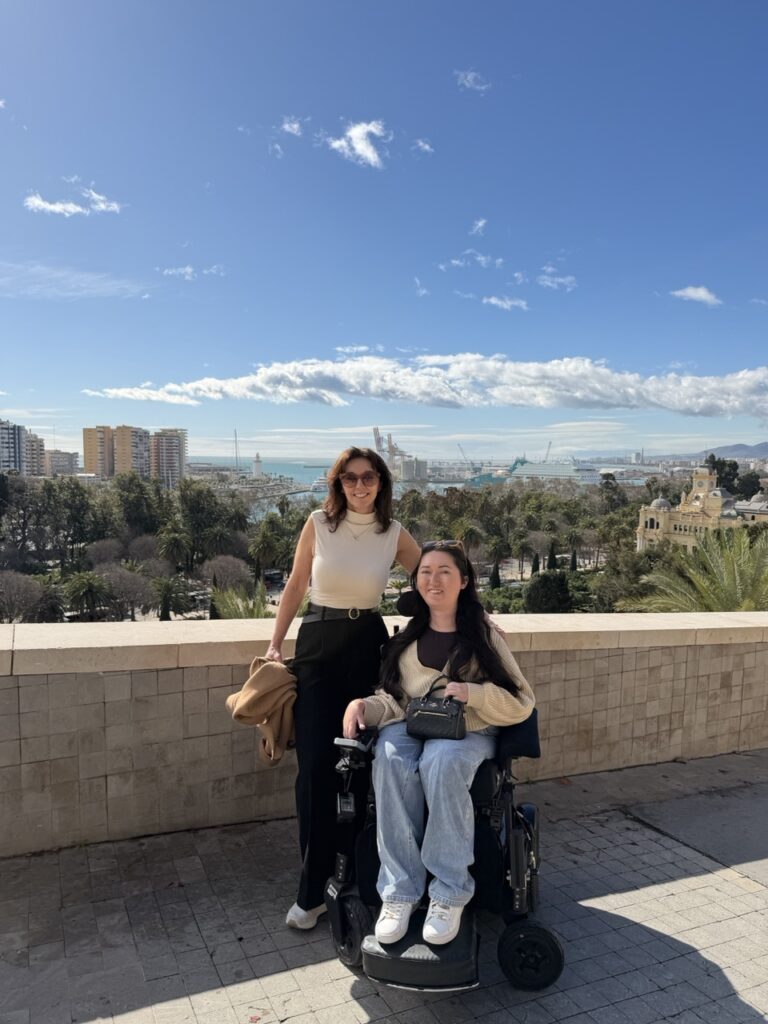

Apparently, there’s also a dedicated elevator on Calle Guillén Sotelo 1 (behind the town hall) that takes wheelchair users all the way up to the upper palace level. I personally could not find a staff member to operate it, although I am being honest, we didn’t try very hard to figure it out. I looked it up online afterwards and it looks like you are supposed to buy your ticket at the machines at the tunnel entrance and then call the elevator. I also read that it is closed on Mondays and reduced admission (€1.50) applies for disabled visitors.
Plaza de Toros La Malagueta: The Bullring Museum
Málaga’s 19th-century bullring is now a national heritage site with a museum inside. Architecturally it’s stunning. However, I’ll be transparent: as someone who cares about animal rights, I had complicated feelings being there — bullfighting is still an active practice in Málaga, and that’s worth knowing before you go. But if you want to see the building and the museum, it’s a remarkable piece of history.
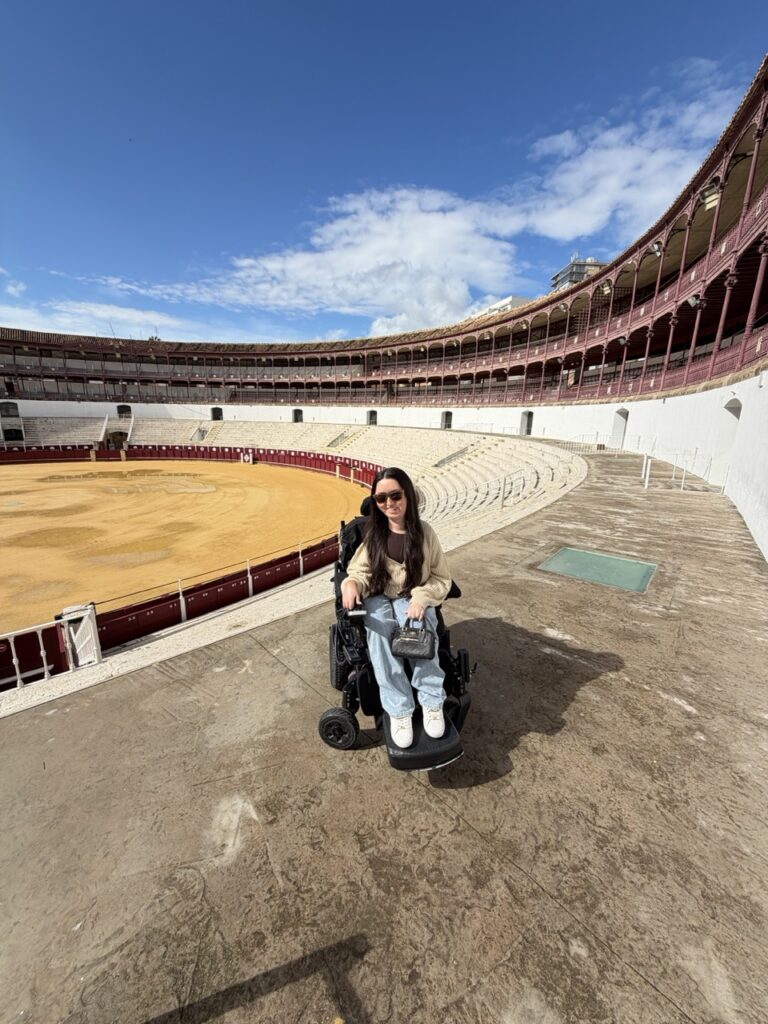
Wheelchair access is to the left of the main entrance — let staff know when you arrive and they’ll escort you via the ramp and lift.
The Waterfront and Muelle Uno: One of the Best Rolls in the City
We spent part of our afternoon exploring the port area, and it was one of my favourite parts of the day. The long seafront promenade is flat and easy to wheel along.
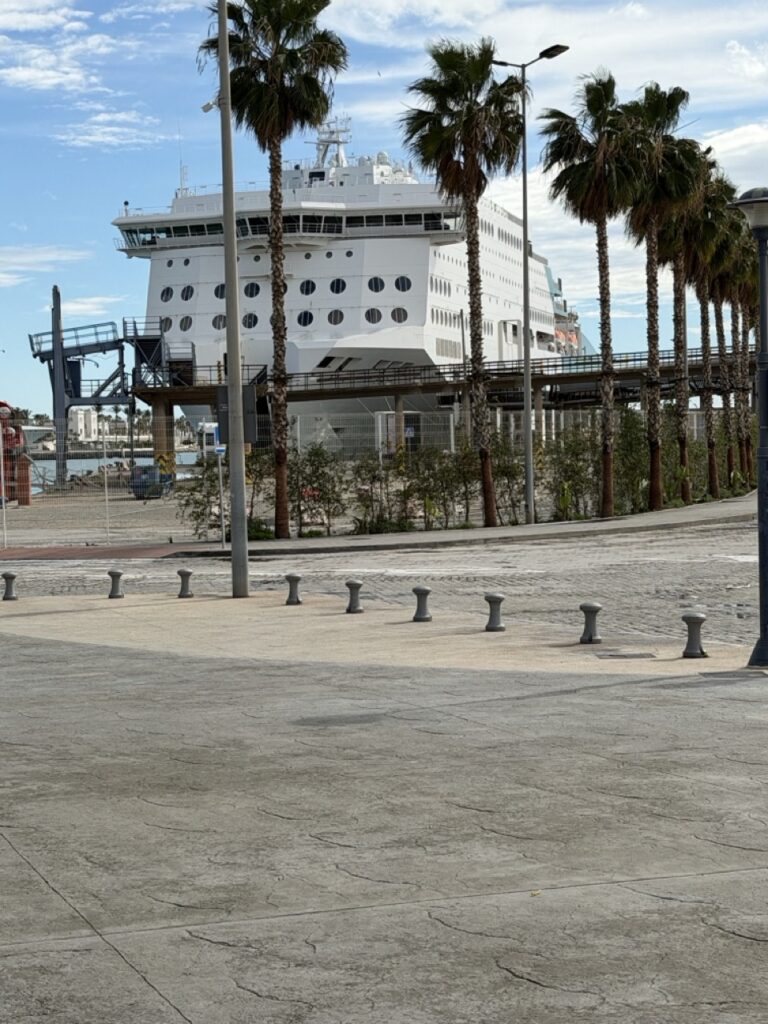
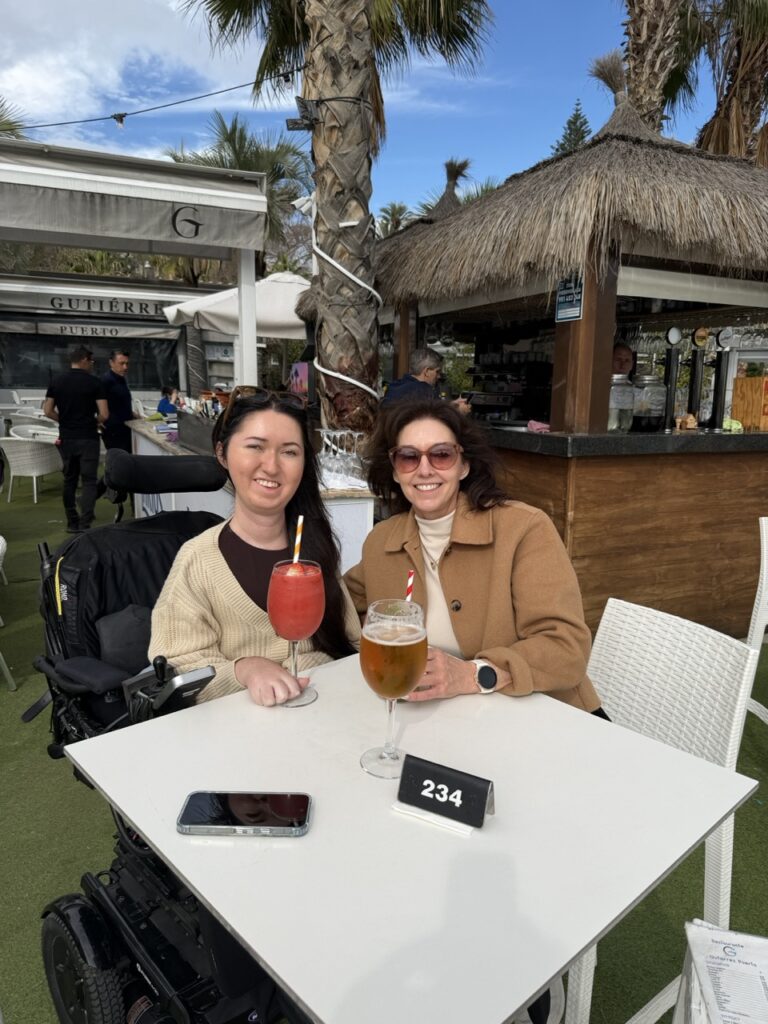
Muelle Uno — the open-air waterfront mall area along the port — is a popular hangout with shops, bars, restaurants, and beautiful views of the port. Accessible underground parking is available, and accessible washrooms are within the complex. It’s a great place to wind down in the late afternoon, and the atmosphere shifts beautifully in the evening.
Málaga’s Art Museums: Accessible, World-Class, and Worth Your Time
Málaga is one of the best cities in Europe for accessible cultural experiences. All five large art museums — the CAC, Picasso Museum, Pompidou Centre, Russian Museum, and Thyssen Museum — are accessible to wheelchair users.
The Picasso Museum is a particular highlight. Wheelchair users enter through an alternate entrance on the side; once inside, the building is navigable with ramps and elevators, and free admission is offered to people with disabilities and one companion. I’d recommend booking your Picasso Museum tickets in advance via Viator to save time — it gets busy.
The Carmen Thyssen Museum is equally impressive: four floors fully accessible by lift, accessible washrooms on each level, accessible activities, audio descriptions, and sign language guides. Free rental wheelchairs are available with no reservation needed.
Where to Eat in Málaga: Accessible Restaurants Worth Knowing
UNICO — The Best Italian Restaurant You’ll Find By Accident
My favourite restaurant in Málaga — and one of the best meals of the entire trip — was an Italian place called UNICO, and the story of how we found it is one I love telling.
Right next door, there’s a tiny local art shop I’d spotted on TikTok (shoutout to Temporanea Concept Shop) that I really wanted to check it out. However, when we arrived, there was a step at the entrance. The owner was so determined to make it work that she went next door to UNICO and asked the owners if they could help lift my power wheelchair in. They were incredibly kind, and after we got chatting, we ended up booking a dinner reservation for the next night.
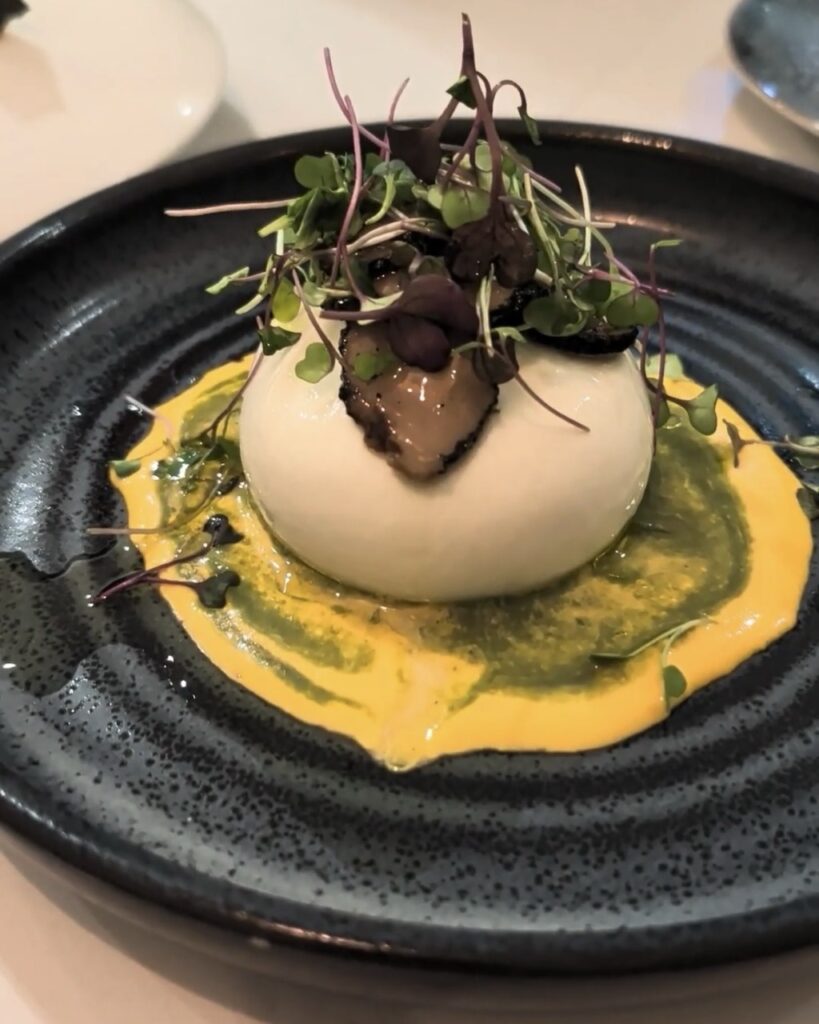

It’s maybe six or eight tables total, but the food was genuinely the best Italian I’ve ever had. The team made us feel like family. HIGHLY recommend.
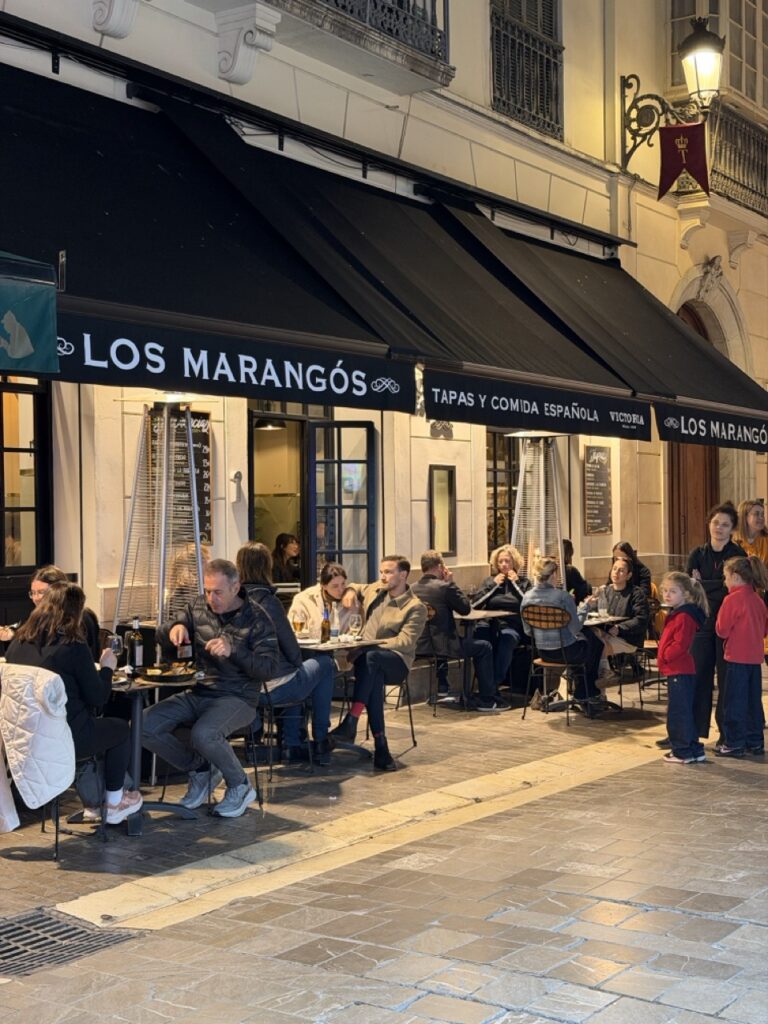
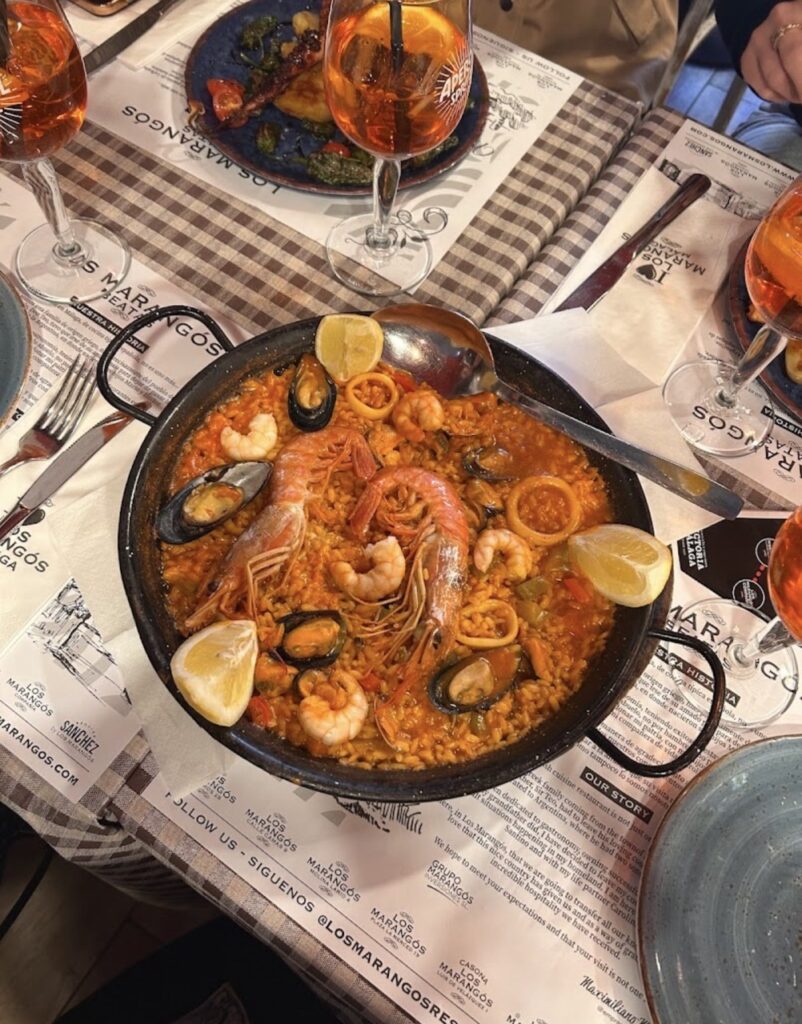
Los Morangos — Solid Spanish Tapas
For Spanish food, Los Morangos is a great choice — solid tapas, great vibe, and a classic Málaga experience.
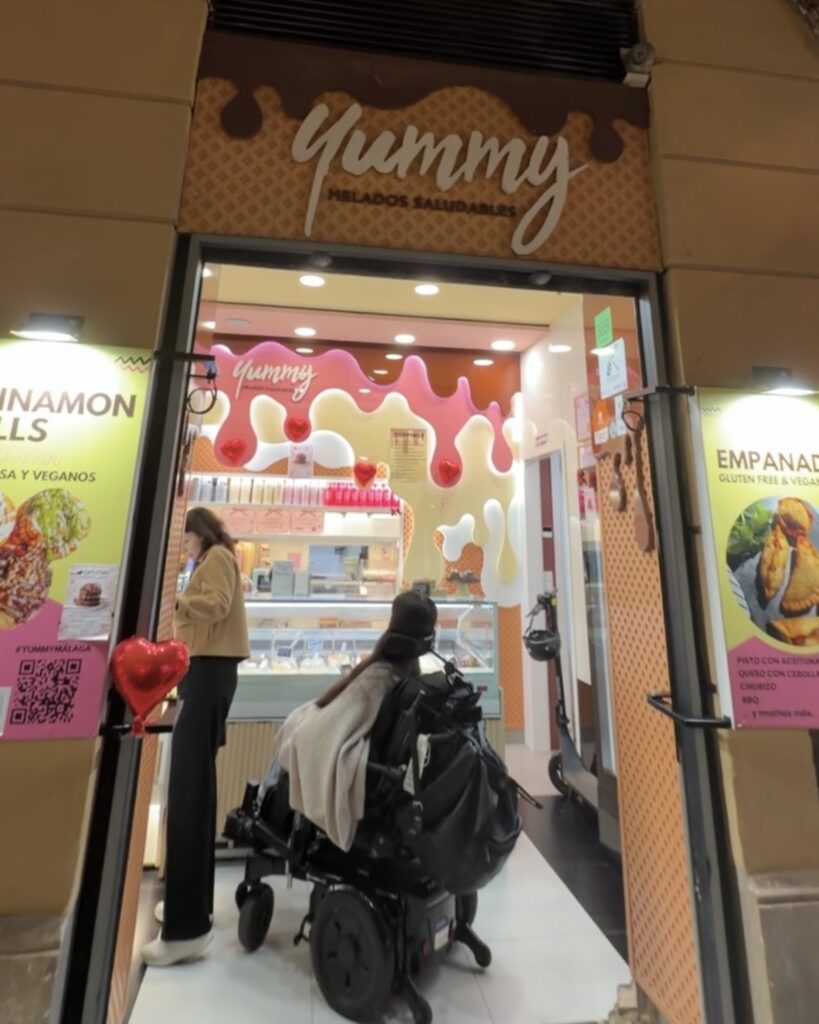
Yummy Gelato — The Perfect Way to End Your Night
Cap the day the way we did: gelato at Yummy, right in the old town. Don’t skip it!

Dining Tips for Wheelchair Users in Málaga
- Outdoor seating is your friend. Málaga’s year-round weather means most restaurants have terrace seating, which tends to be more spacious and accessible than tight indoor dining rooms.
- New and refurbished restaurants in Spain are required by law to include accessible washroom access, so sticking to newer spots is a good strategy if accessible washrooms matter to you.
- Tapas culture (hopping between small spots) actually works well for wheelchair users. You’re not locked into one venue’s layout for the whole evening.
- If a restaurant has a step at the entrance, ask anyway. In our experience, Málaga’s restaurant owners are warm and genuinely willing to find a solution.
Getting Around Málaga in a Wheelchair: Do You Even Need a Car?
You Probably Don’t Need a Vehicle in the City
If you’re spending two or three days in Málaga itself, the honest answer is: you likely don’t need a car at all. The wheelchair accessible old town is compact and everything is easy to get to by walking or rolling. This spontaneous, no-booking-required freedom is one of the things that made Málaga stand out for me.
Málaga Metro — Fully Wheelchair Accessible
The Málaga Metro is fully wheelchair accessible and one of the easiest public transit systems I’ve used. Both metro vehicles and stations are fully accessible for passengers with disabilities. Elevators are available at all stations, with priority seating reserved for elderly passengers and people with disabilities.
We used the metro to connect the main María Zambrano train station area with the historic centre at Atarazanas. Every single time we used it, the elevators were working. You can find full accessibility details on the Metro Málaga official accessibility page.
Cercanías — Accessible Commuter Train for Day Trips
The Cercanías commuter train is a great accessible option if you want to explore the wider coast without a rental vehicle. We used it for a day trip to Torremolinos, and the boarding process was smooth and easy. According to Renfe, all Málaga Cercanías lines have a lift, ramp, or easy access for wheelchair users.
One thing worth knowing: accessibility refers to the station itself, not necessarily the terrain around it — some stations along the Costa del Sol have hilly access roads leading to them. If you’re travelling independently, it’s worth checking your specific stop ahead of time.
Accessible Taxis in Málaga — Book in Advance, Don’t Assume
This is one of the most important things I can tell you, and it’s something most accessibility guides skip over: accessible taxis with ramps in Málaga are much harder to find in practice than the official information suggests.
Yes, the city has adapted taxis. But getting one when you need it (especially for airport transfers) is not as simple as showing up at a rank. You often need to book in advance. Don’t leave it to chance, especially if you’re relying on one to get to or from the airport.
If you use a power wheelchair, also ask about interior headroom when you book. Some adapted vehicles have limited height clearance, which can mean reclining your backrest to get in and out comfortably. My power wheelchair barely fit, so I was really glad that we didn’t have to rely on taxis for getting around this city itself — we just used them to get to and from the airport.
For many wheelchair users doing day trips along the coast, renting an accessible vehicle (see the Rent a Car Caleta section below) is honestly the more practical and independent solution — and gives you a lot more flexibility than relying on taxis.
Accessible Vehicle Rental — Rent a Car Caleta
For exploring the wider Costa del Sol region — which I’d absolutely recommend — an accessible rental vehicle gives you a level of freedom that nothing else matches. We used Rent a Car Caleta, and it was one of the best decisions we made for the trip. We had a Volkswagen Caddy with a rear entrance ramp that my power wheelchair loaded onto directly, which made day trips to Nerja, Granada, and beyond completely straightforward.
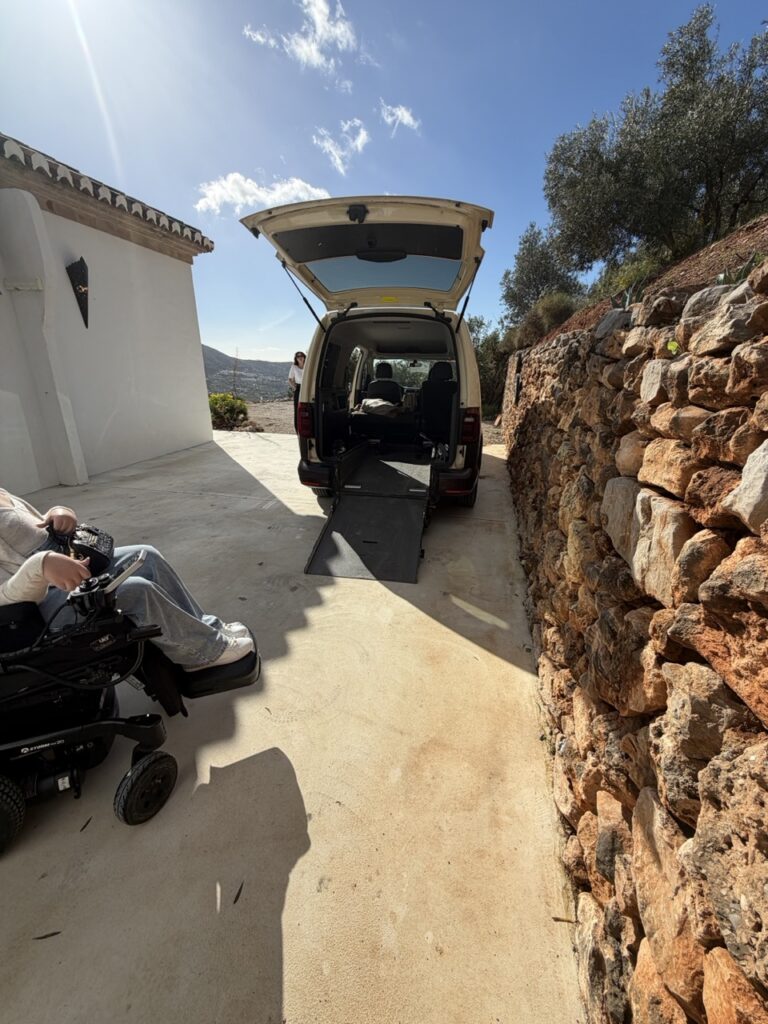
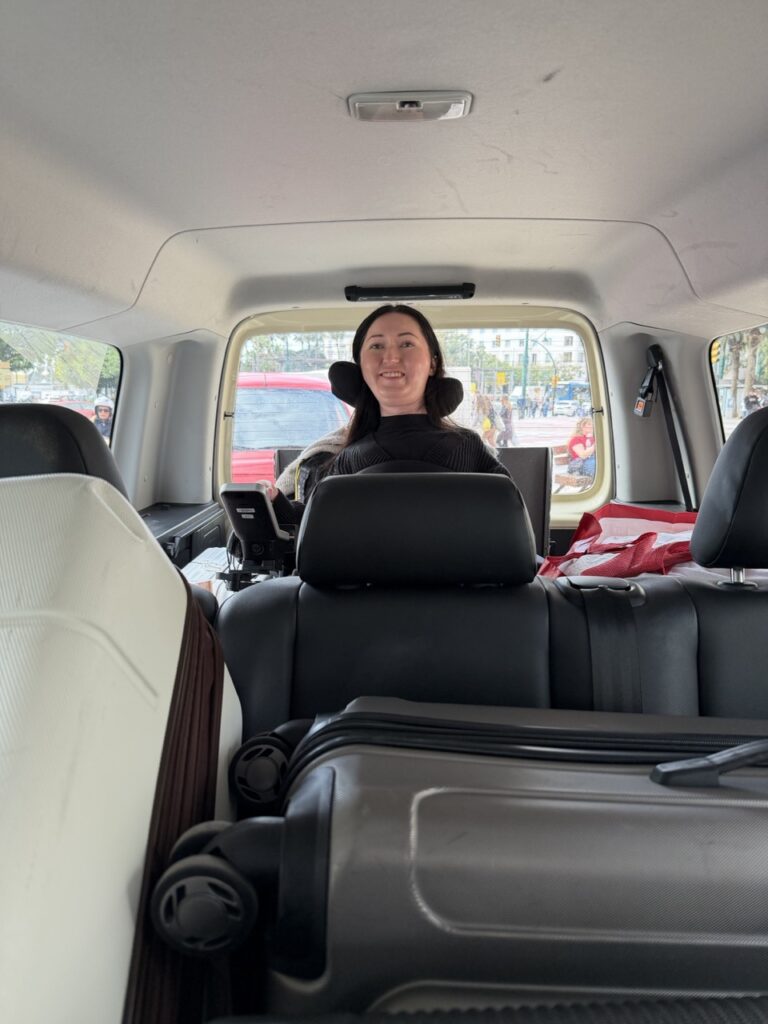
Rent a Car Caleta describes itself as a pioneer in Málaga for adapted vehicles, serving both wheelchair passengers and drivers with varying degrees of disability. They’re also, according to other travellers, the only accessible vehicle supplier offering delivery directly to Málaga Airport — a significant advantage if you want a vehicle waiting from the moment you land.
Their website is rentacarcaleta.com — book well in advance, especially in peak season.
If you don’t require a wheelchair accessible vehicle with a ramp, consider renting from one of the many other car rental companies in Malaga. There are plenty of options!
Where to Stay in Málaga: Accessible Hotel Options
AC Hotel Palacio Málaga — Best for Location
The AC Hotel Palacio Málaga has the best location in the city for wheelchair users — you’re steps from the Cathedral, close to the Alcazaba elevator entrance, and right on the edge of the main pedestrian shopping street. For maximum accessibility of the city itself, this location is hard to beat.
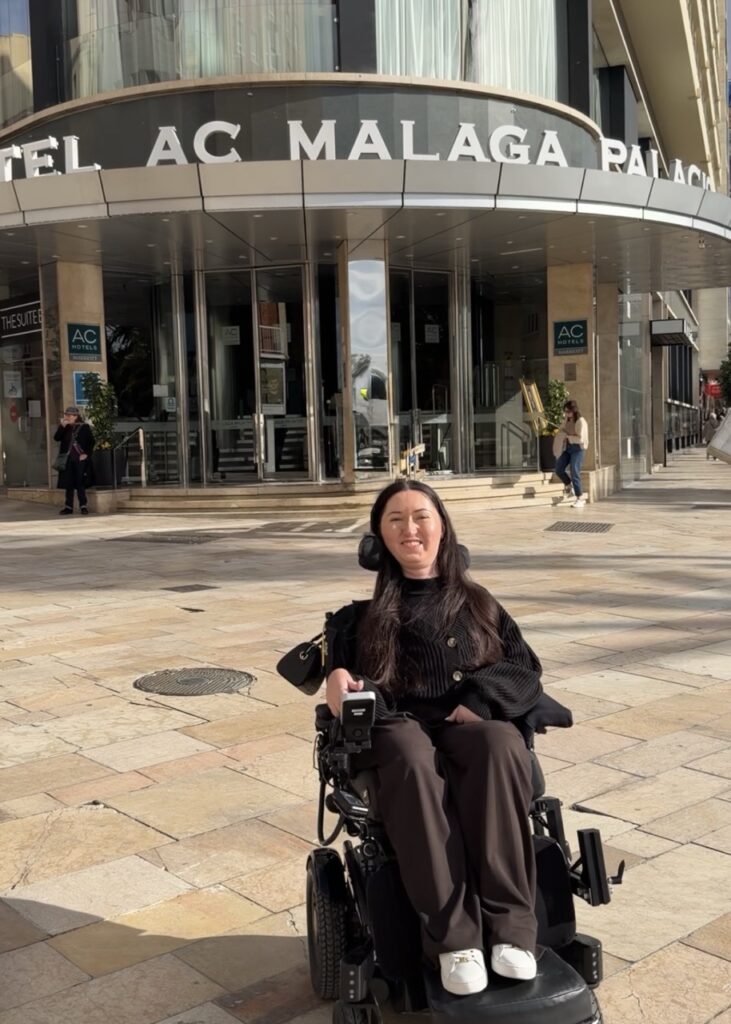
That said, here’s the honest picture. There is a stairlift at the entrance that requires staff assistance, and getting into the hotel itself requires a staff member to put down a ramp. The team was always friendly and present, but it does reduce independence — particularly for solo travellers.
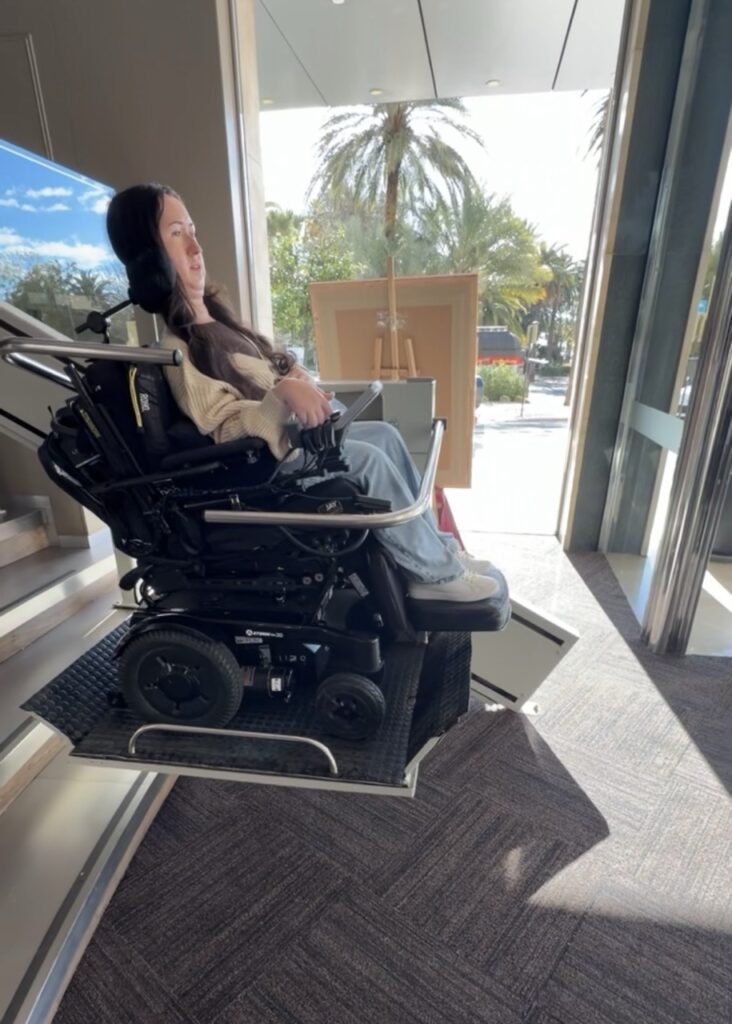
The elevators are very small, which is standard across Europe but worth flagging. My power wheelchair just barely fit, and we had to remove my backpack. If you use a larger power wheelchair, contact the hotel directly about elevator dimensions before you book. This applies to most European hotels, not just this one.
The rooftop restaurant is lovely, has a ramp for outdoor access, and the views over the city are incredible.
The most important thing: always request a wheelchair accessible room when you book. We were in a suite and couldn’t get an accessible option — the bathroom was not wheelchair accessible as a result. In fact, the bathroom door was so narrow that I couldn’t even get my wheelchair into it. Since we were only there for two nights, this wasn’t a huge deal and I just had my dad carry me into the washroom, but it probably would have been difficult to stay in this room configuration for a greater length of time.
Verdict: Recommend for the location, with those caveats clearly in mind.
👉 Book the AC Hotel Málaga Palacio on Expedia (affiliate link)
👉 Book the AC Hotel Málaga Palacio on Booking.com (affiliate link)
Barceló Hotel at Málaga María Zambrano — Best for Convenience
When we returned to Málaga near the end of our trip, we stayed two nights at the Barceló hotel attached to the main María Zambrano train station. It’s further from the historic centre but a solid option if you’re arriving or departing by rail, or if you want something slightly more budget-friendly. The station and attached Vialia mall are fully step-free throughout. As always, request an accessible room in advance, because non-accessible hotel rooms across Spain are very compact. It is definitely tight to navigate a standard hotel room layout with a mobility aid!
👉 Book the Barceló Málaga on Expedia (affiliate link)
👉 Book the Barceló Málaga on Booking.com (affiliate link)
Considering a Villa? — The Best Accessible Base in Costa Del Sol
If you’re open to staying a little outside Málaga and exploring the Costa del Sol more broadly, there is another option worth knowing about: we spent the middle of our trip at a fully accessible villa that was one of the best places I’ve ever stayed. Having a proper accessible base made the whole trip — the day trips, the beach days, all of it — so much more relaxed. It’s something to seriously consider if you’re staying for more than a couple of nights or travelling with a larger group.
👉 Click here to book the best wheelchair accessible villa near Málaga, Spain.
Practical Accessibility Tips for Visiting Málaga
- Terrain and pavement: Old town Málaga is predominantly flat with smooth, marble-like surfaces. It’s one of the most rollable city centres in Europe.
- Cobblestones: Largely absent from the historic centre. The marble-like paving is one of Málaga’s biggest accessibility wins.
- Accessible beaches: La Malagueta and Misericordia beaches have access ramps, accessible showers, and toilets. In summer (15 July to 15 September), a municipal service provides specialist staff, amphibious chairs, and hoisting assistance.
- Accessible washrooms: Málaga’s city centre has limited public accessible toilets — plan around museum visits and newer restaurants. New and refurbished restaurants are legally required to include accessible washrooms.
- European elevators: Consistently smaller than North American equivalents. Always check hotel elevator dimensions before booking if you use a larger power wheelchair. This applies across Spain and most of Europe.
- Best time to visit: Off-season is better for wheelchair users — fewer crowds, easier access to attractions, more space everywhere. Summer is very hot and very busy.
- Buses: Málaga buses have wheelchair access via double doors in the centre, with designated areas and seatbelts inside.
Frequently Asked Questions
Is Málaga accessible for wheelchair users?
Yes — Málaga is one of the most wheelchair-friendly cities in Europe. The old town has smooth, flat, marble-like streets with almost no cobblestones, most major attractions have wheelchair access, and the metro is fully accessible.
Do you need a car in Málaga as a wheelchair user?
Not if you’re staying in the city centre. The old town is compact and easy to navigate independently. A rental vehicle is useful if you want to do day trips along the Costa del Sol.
Are Málaga taxis wheelchair accessible?
Accessible taxis with ramps exist but are limited in practice. Always pre-book rather than assuming one will be available at a taxi rank, especially for airport transfers. If you use a power wheelchair, ask about interior headroom when you book — some adapted vehicles have limited height clearance.
Is the Alcazaba accessible for wheelchair users?
Partially. There’s a long ramp that takes you up to a viewpoint — no ticket required, and the views over the city are some of the best in Málaga. If you want to access the upper palace area, there’s a dedicated elevator on Calle Guillén Sotelo 1 (behind the town hall), but you’ll need to plan for it — it has to be called, tickets are purchased at the tunnel entrance, and it’s closed on Mondays. Reduced admission (€1.50) applies for disabled visitors.
Is the Málaga Cathedral free for disabled visitors?
Yes. People with disabilities and one companion get free entry to the Cathedral of Málaga. No advance booking is required — just go to the entrance and ask.
Final Verdict: Is Málaga Good for Wheelchair Users?
Yes — Málaga is an excellent destination for wheelchair users and one of the most accessible cities in Europe. It’s not perfect, but the combination of smooth terrain, a compact walkable centre, strong cultural accessibility, and genuinely helpful locals makes it possible to travel spontaneously and independently in a way that many cities don’t allow.
I arrived not knowing what to expect and left wanting to come back.
If you have specific questions about navigating Málaga as a wheelchair user, drop them in the comments below. And stay tuned — posts on the accessible villa, Granada, and Nerja are coming soon.
Looking for more wheelchair accessible travel inspiration? Check out my wheelchair accessible trip to Central Huron, Ontario or my complete guide to wheelchair accessible Nashville!
A note on accuracy:This post is based on my personal experience as a power wheelchair user, supplemented with verified accessibility information. Details can change — I always recommend confirming directly with venues before your visit where possible.